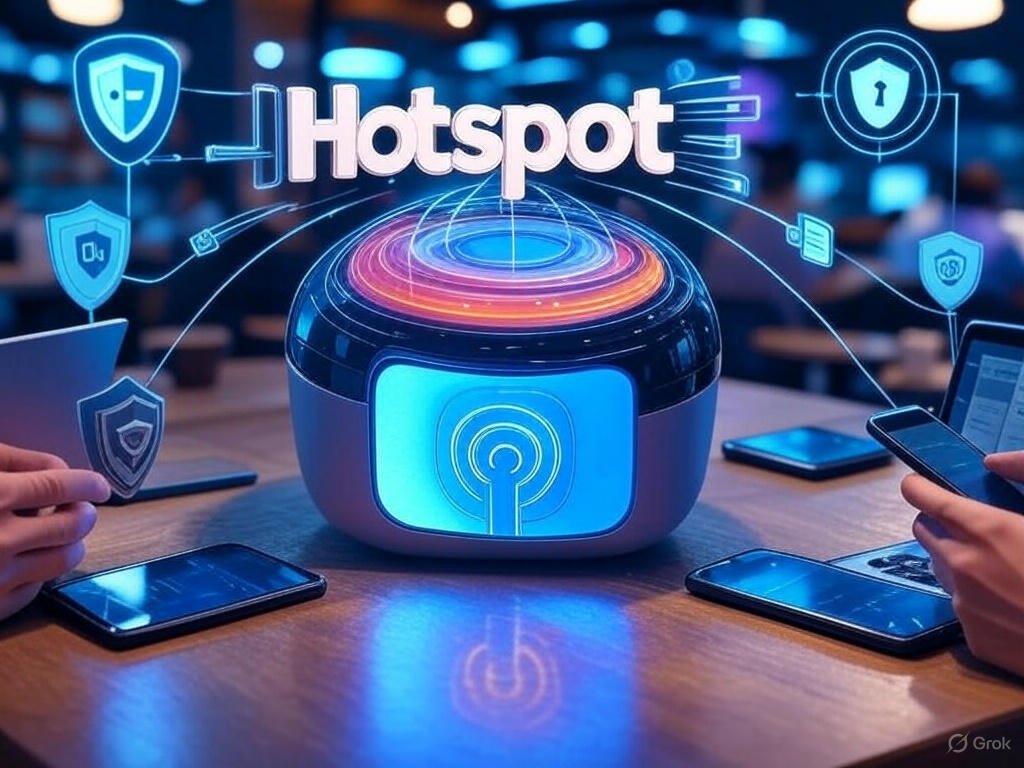
In today’s digital world, staying connected is essential, and hotspots make it possible to access the internet on the go. Whether in a coffee shop, an airport, or even using your mobile phone, hotspots provide wireless internet access in various locations. This article explores what hotspots are, their types, and security measures to protect yourself while using public networks.
What Is a Hotspot?
A hotspot is a physical location where people can connect to the internet wirelessly using devices like laptops, tablets, and smartphones. Hotspots can be public or private, offering internet access through a Wi-Fi router or a wireless access point connected to an internet service provider.
Types of Hotspots
- Public Hotspots – Found in coffee shops, hotels, airports, airplanes, and even some public transportation. Some public hotspots are free, while others require payment or authentication via a password.
- Private Hotspots – Created at home using a personal Wi-Fi router, allowing family and friends to connect securely.
- Mobile Hotspots – Portable devices or smartphone-based hotspots that provide wireless internet access using cellular networks.
How Do Hotspots Work?
Hotspots are created using Wi-Fi routers or wireless access points that broadcast internet signals. Connecting to a hotspot follows the same steps as joining any Wi-Fi network:
- Select the network (SSID) from the available connections.
- Enter the password if required.
- Start browsing the internet once connected.
Mobile hotspots function similarly, utilizing cellular data from network providers like Verizon, AT&T, T-Mobile, and Sprint to offer connectivity within a limited range.
Security Risks and Precautions for Public Hotspots
While public hotspots provide convenience, they also pose security risks because multiple users share the same network. Hackers can exploit public Wi-Fi vulnerabilities, making it essential to follow security practices:
How to Stay Safe on Public Hotspots
- Disable Shared Folders – Turn off file sharing or password-protect shared folders to prevent unauthorized access.
- Use Antivirus Software – Install a reliable antivirus program to detect and prevent malicious threats.
- Enable Firewall Protection – Ensure your device’s firewall is active for added security.
- Use a VPN (Virtual Private Network) – A VPN encrypts data, protecting personal information from hackers while browsing online.
- Avoid Accessing Sensitive Information – Refrain from logging into banking websites or entering confidential credentials when connected to public Wi-Fi.
Hotspot Myths Debunked
Many people misunderstand what a hotspot is. Let’s clarify:
A hotspot is NOT a router, access point, mobile phone, or even a coffee machine catching fire!
A hotspot IS a physical location that provides internet access via wireless signals.
Conclusion
Hotspots offer convenient and wireless internet access, whether public, private, or mobile. While they enable seamless connectivity, users must take precautions when accessing public networks to ensure their data remains secure. Using a VPN and following basic cybersecurity measures can prevent unauthorized access and safeguard personal information.
FAQs
1. What is the difference between a public and private hotspot?
Public hotspots are available in cafés, hotels, and airports, while private hotspots are created at home or through a mobile device.
2. Can a mobile phone create a hotspot?
Yes! Most smartphones allow users to enable mobile tethering and share cellular data with other devices via Wi-Fi.
3. Why is using a VPN important on public hotspots?
A VPN encrypts your online activity, protecting your personal data from hackers on unsecured public networks.
4. Can hotspots be free, or do they require payment?
Some hotspots are free, while others require a subscription or payment, depending on the provider.