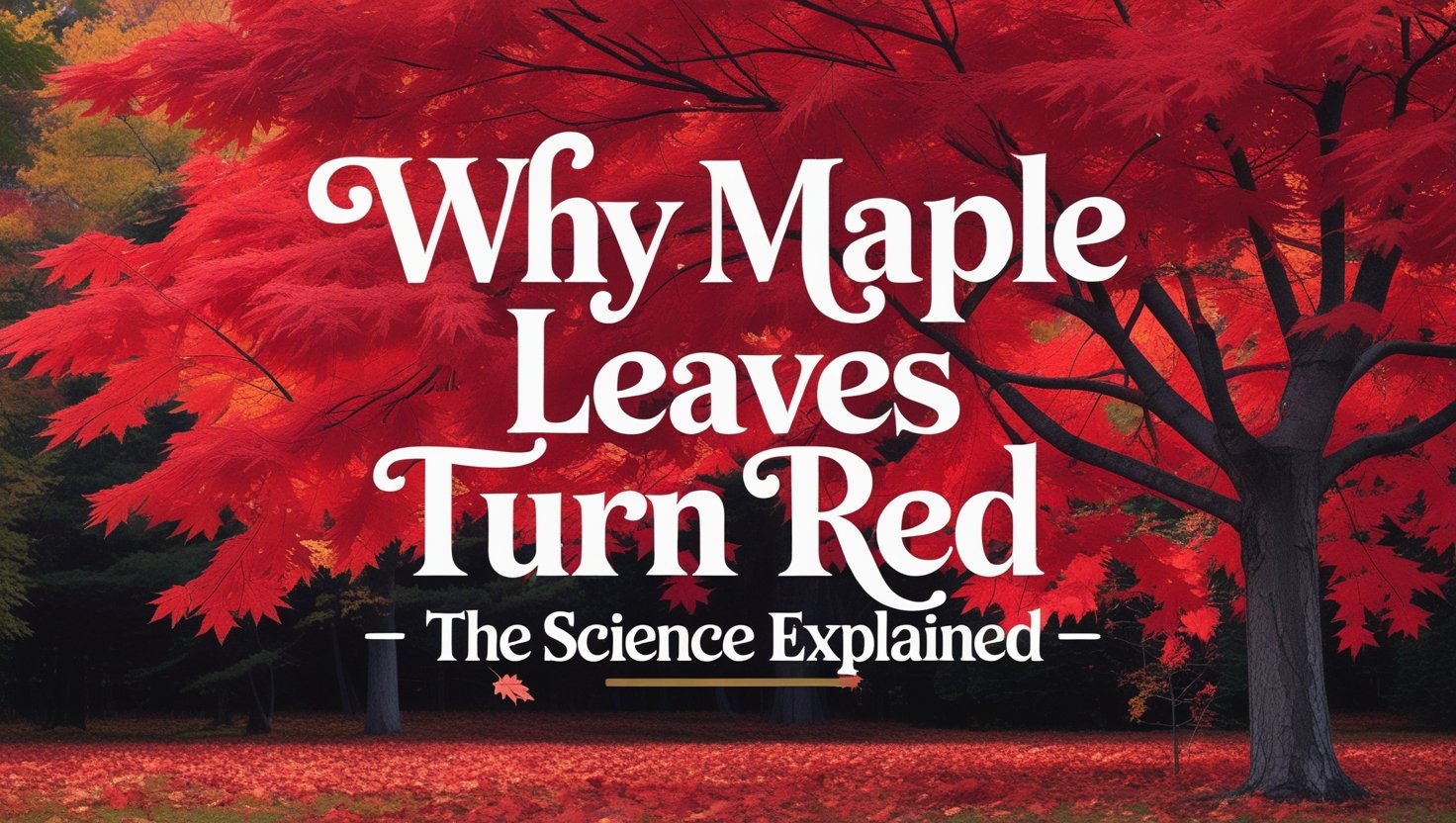
When Autumn arrives, the leaves of the trees become colorful, especially the leaves of the maple shine like burning fire. This scene shocks everyone. But the main question is: Why do these leaves turn red? And why does only the maple look so bright red? In this article, we will discuss and try to understand what is the process of this changing color, and why only maple leaves shine red.
What Leaves Are Made Of:
Every leaf has 3 pigments, which make it colorful.
- Chlorophyll: Which gives it a green color.
- Carotenoids: It give leaves a yellow and orange color.
- Anthocyanins: This pigment gives leaves red, purple, and pink colors.
In the time of summer, the chlorophyll is most present in the leaves, which is why we see leaves in green color more often. Chlorophyll works like a cover, and it hides other colors.
But when the Autumn season arrives and the days become shorter, then chlorophyll starts to break down. Then, the other pigments like carotenoids and anthocyanins come forward, and the leaves become red, yellow, or orange.
Enter the Anthocyanins: Nature’s Crimson Artist:
Anthocyanins are special pigments that give leaves the color of red, purple, and pink. They are made during the time of autumn, when the days become colder and the nights become longer. This pigment is not present in all the leaves, and this thing makes the maple so special. Maple leaves produce anthocyanins, which is why they turn so bright red.
Example:
- Sugar Maple: Produces anthocyanins → turns red.
- Oak tree: Does not produce anthocyanins → turns brown or maroon.
Timing is Everything: Weather’s Role in Red:
For the perfect red color, it is important to have:
- Sunny Days
- Cool Nights
Both of these combined to help store sugar in the leaves, which is a process known as the “Sugar Trap” theory. When sugar is stuck in the leaves, then anthocyanins are made more, and leaves shine even brighter red.
Case Study: Vermont (USA):
Vermont’s autumn is famous all over the world, but why?
Because it has this ideal weather every year — sunny day + cool night = a lot of red colors!
Evolution or Expression? Theories Behind the Red:
There are some interesting theories behind the red leaves:
Protective Hypothesis:
It is said that anthocyanins protect leaves from sunlight, like a natural sunscreen, so that leaves do not get damaged in autumn.
2. Pest Deterrent Theory:
Another theory says that red color keeps insects away, like a warning signal – “Don’t come here!”
3. Pollinator Attraction?
Some people say that red color attracts insects like it does flowers, but this idea is not yet clear – it may be a myth.
4. Scientific Debate:
Scientists are still debating:
Are red leaves a result of evolution?
Or are they just a side effect when chlorophyll is produced?
Why Some Maples Glow Red and Others Don’t:
Maple species and cultivars vary in their autumnal flair. Genetics dictate each tree’s capacity to produce anthocyanins and carotenoids, as well as how quickly chlorophyll breaks down. For instance, the Sugar Maple (Acer saccharum) often dazzles in deep reds and oranges, while the Silver Maple (Acer saccharinum) leans toward golds and yellows. Even within a single species, soil conditions and microclimates can influence gene expression and pigment levels, creating a mosaic of hues across a single forest.
Photoprotection vs. Insect Deterrence:
Why invest energy in making red pigments at all? Scientists propose two leading hypotheses. The photoprotection theory suggests anthocyanins act like a sunscreen, filtering intense light as chlorophyll wanes and helping the tree reclaim nutrients efficiently. The insect deterrence theory argues that bright red warns pests, like aphids, that leaves are poor food sources or rich in defensive chemicals, preventing damage and disease spread. Both theories have supporting evidence, but research is ongoing to pin down their relative roles.
Climate’s Role:
Autumn weather swings can make or break peak color. Early frosts damage cell walls, turning leaves brown before reds fully develop. Prolonged rains and overcast skies limit the sunlight needed for anthocyanin synthesis, resulting in muted tones. Dry spells, however, concentrate leaf sugars, potentially deepening reds if nights stay cool. In milder autumns with warm, sunny days and chilly nights, maples often display the most striking crimson carpets.
When Your Tree Wasn’t Really Red:
Ever expected a scarlet blaze only to see yellow leaves instead? Some “red” maples sold in nurseries are actually cultivars bred for hardiness or growth rate, not autumn color. These golden cultivars retain much of their carotenoid pigments and produce little anthocyanin, yielding more yellows than reds. To ensure fall fireworks, look for well-documented varieties like ‘October Glory’ or ‘Red Sunset,’ renowned for consistent red displays.
Ecological Significance and Future Research:
Autumn leaf color isn’t just a visual feast, it has ecological ripple effects. Bright foliage may influence soil chemistry as leaves decompose, affecting nutrient cycling. Color shifts can also alter wildlife behavior, from feeding patterns to habitat selection. As climate change reshapes temperature and light regimes, fall colors are shifting too, flowering plants bloom earlier, and leaf-color seasons may shorten or fade. Ongoing studies monitor these trends, using satellite imagery and citizen science to map color changes worldwide.
Conclusion:
The transformation of maple leaves into blazing reds each fall is a symphony of broken-down chlorophyll, freshly synthesized anthocyanins, genetics, and weather. It’s a tale of survival, trees repurposing nutrients, protecting themselves from light stress, and possibly warding off hungry insects. While some maples unfurl vivid crimson canopies, others opt for golds and oranges, influenced by species, cultivars, and local conditions. As we celebrate autumn’s fiery finale, we’re reminded of nature’s intricate balance, where even the reddest leaf tells a story of biochemistry and adaptation.
FAQs:
1. What causes leaves to change from green to red?
Chlorophyll breakdown reveals carotenoids and triggers new anthocyanin production, painting leaves red.
2. Why are some maples red and others yellow?
Genetics control pigment levels: some species produce more anthocyanins (reds), others more carotenoids (yellows).
3. How do temperature and light affect red coloration?
Warm days boost sugar levels; cool nights trap sugars in leaves, enhancing anthocyanin synthesis for deeper reds.
4. Do red pigments protect the tree?
Anthocyanins can shield leaves from excess light (photoprotection) and may deter leaf-eating insects.
5. Can early frost prevent red leaves?
Yes. Hard freezes damage leaf cells, causing browning and reducing the vibrant red phase.
6. Will climate change alter fall colors?
Likely. Shifts in temperature and daylight patterns can shorten or mute color seasons, impacting autumn displays and ecosystems.