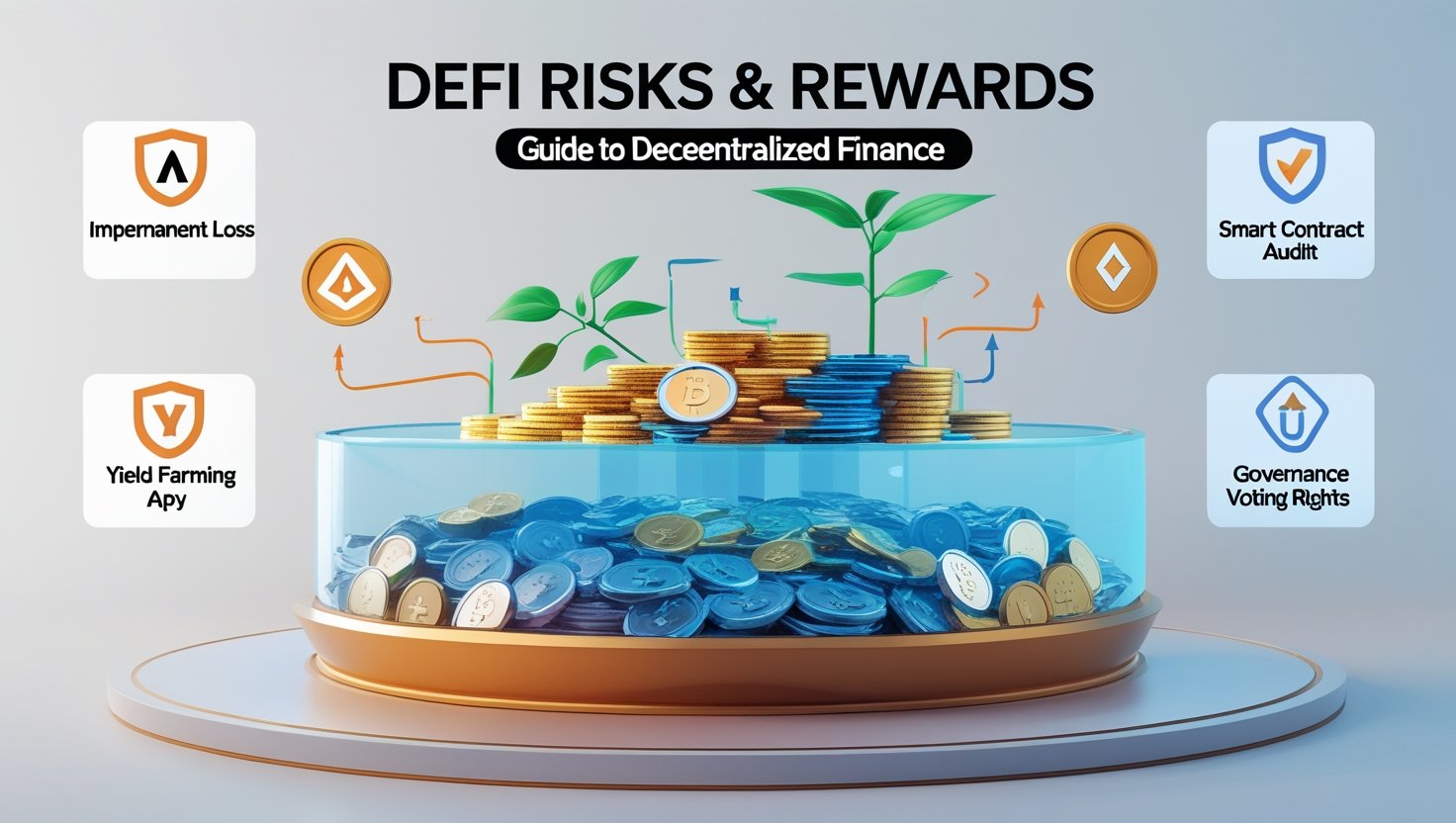
Imagine a financial system that cuts out the middleman and puts power directly in your hands. DeFi, Decentralized Finance, offers both exciting high-yield opportunities and significant risks. Let’s explore how to harness its potential while staying protected.
Unlocking the Decentralized Frontier:
At its essence, DeFi is about creating a financial ecosystem free from the constraints of traditional banks. Built on blockchain technology and powered by smart contracts, this novel system lets participants perform transactions directly and transparently. Rather than relying on centralized institutions, users lend, borrow, trade, and earn interest autonomously using programmable protocols.
This new financial frontier is driven by community and technology. Decentralized Finance promises lower fees, faster transactions, and more democratic access. However, while these benefits ignite innovation, they also invite new vulnerabilities. Every transaction, every smart contract execution, reveals both the power of trustless systems and the challenges that arise without a central authority. As this domain rapidly evolves, understanding its mechanics is the first step toward leveraging its strengths and managing its risks.
By breaking away from traditional finance, DeFi empowers users to take charge of their financial lives. Whether you’re a seasoned cryptocurrency investor or a curious newcomer, grasping the underlying framework of these trustless systems opens up a world of possibility where technology, community, and finance converge.
The Pillars of DeFi:
The decentralization of finance rests on a trio of foundational technologies. Blockchain serves as the immutable ledger, ensuring every transaction is recorded and verified transparently. Every data point or trade is secured through cryptography, fostering trust among participants without the need for intermediaries.
Smart contracts are self-executing agreements coded on a blockchain. They automatically enforce the rules of a transaction once predetermined conditions are met. This automation not only cuts costs but also minimizes human error. The robust architecture these contracts provide is the bedrock of numerous DeFi applications, ranging from lending platforms to decentralized exchanges.
Token ecosystems form the lifeblood of Decentralized Finance. Tokens represent assets, voting rights, or incentives within these networks. They facilitate liquidity, empower yield farming, and fuel innovative projects by aligning the interests of all stakeholders. In this integrated system, every new protocol or application builds on the secure, open foundation laid by blockchain and smart contract technology.
By combining these pillars, DeFi creates a dynamic and open financial marketplace. This market is not only accessible to anyone with an internet connection but also evolves rapidly, introducing new opportunities for those willing to embrace its revolutionary mechanics.
Charting the Hidden Risks of Decentralized Finance:
Every breakthrough comes with its share of challenges, and DeFi is no exception. While the removal of centralized intermediaries creates freedom and flexibility, it also opens the door to increased exposure to risks.
Volatility is one of the primary concerns. Cryptocurrencies, which underpin DeFi markets, can experience dramatic price swings within moments. Such fluctuations can quickly erode the value of investments or expose one to liquidation risks. Moreover, high-yield opportunities like yield farming, though lucrative, only amplify this volatility.
Another significant risk lies in the realm of smart contract vulnerabilities. Even minor bugs or loopholes in code can lead to exploits, resulting in significant losses for investors. Numerous projects have experienced breaches when malicious actors found ways to manipulate or bypass the intended logic of a contract.
Market liquidity is another challenge. In less mature or niche protocols, insufficient liquidity can lead to steep price impacts during large transactions. Consequently, while a platform may promise high rewards, insufficient liquidity often introduces hidden costs and operational uncertainties.
Furthermore, regulatory uncertainties hover over the Decentralized Finance landscape. The rapidly evolving nature of DeFi means governments and regulatory bodies are still trying to catch up. This lag can result in ambiguous legal frameworks that may expose users to unforeseen legal risks or compliance challenges.
Navigating these risks requires vigilance and in-depth research. It is essential to thoroughly assess the technical and market forces behind any DeFi platform before diving in. Only by understanding both the potential rewards and inherent dangers can one craft a balanced strategy in this brave new financial world.
High-Yield Opportunities in DeFi:
The rewards in DeFi are as enticing as its risks. At the forefront are strategies like yield farming, staking, and liquidity mining, each offering the promise of high returns in a decentralized setup. Investors can often find annual percentage yields (APYs) that outpace traditional savings accounts, sometimes reaching double-digit margins.
Yield farming involves lending your crypto assets to platforms that then generate interest or additional tokens. This dynamic process constantly shifts based on market demand, providing opportunities for those who can adapt quickly. Staking, similarly, locks assets within a network to help secure operations in return for rewards, a process that strengthens the network and shares in the benefits.
Liquidity pools are also a core part of the DeFi rewards canvas, where users provide liquidity for decentralized exchanges. In return, they earn a proportion of the fees or rewards generated by the protocol. These systems democratize access to trading revenues, turning every participant into a stakeholder.
Additionally, some DeFi projects incorporate token incentives that can appreciate over time, adding another layer of potential profit. Early adopters in these ecosystems may benefit from tokens that appreciate significantly in value as the network grows and matures.
The allure of these opportunities invites many to experiment in the Decentralized Finance space. However, it’s essential to remember that high rewards typically come with high risks. Profits are never guaranteed, and the volatile nature of DeFi means that meticulous planning and continuous monitoring are key to capturing its upside while mitigating losses. The art of thriving in DeFi lies in balancing ambition with caution, ensuring that every high-yield venture is grounded in solid research and risk management.
Blueprinting Your Path in DeFi:
Success in DeFi isn’t a game of chance, it requires a strategic approach built on careful planning and execution. First, diversify your investments. Rather than putting all your assets into one protocol, spread the risk across various projects and yield strategies. This strategy not only protects you from a single point of failure but also positions you to benefit from emerging trends in the market.
In-depth research is non-negotiable. Given the technical complexity and fast-paced evolution of DeFi, staying informed through credible sources, audits, and community feedback is vital. Look for platforms with transparent development histories, thorough smart contract audits, and active community engagement. Choose projects that demonstrate both technical soundness and realistic value propositions.
Risk management practices should be integral to your DeFi strategy. This includes setting stop-loss orders, monitoring market trends regularly, and maintaining a level of liquidity that prevents forced exits during downturns. Embrace tools and dashboards designed specifically for Decentralized Finance tracking; these can help you quickly identify and respond to sudden market moves.
Finally, align your strategy with your personal risk tolerance. DeFi offers oxygen to risk-takers but isn’t a space for those looking for quick, guaranteed profits. Cultivate a cautious mindset, and gradually scale up your exposure as you gain more confidence and expertise. By combining diversification, diligent research, and proactive risk control, you create a blueprint for long-term success in the DeFi ecosystem.
Trends and Regulatory Waves in DeFi:
As DeFi continues to disrupt traditional financial systems, its future will largely depend on ongoing innovation and evolving regulations. Emerging trends such as the advent of “DeFi 2.0” propose more resilient and user-friendly protocols, integrating features like insurance funds and adaptive governance to minimize risk.
Regulatory landscapes are slowly catching up with the pace of innovation. Governments worldwide are developing frameworks to integrate Decentralized Finance into existing financial systems while safeguarding investors. Although the evolving regulatory environment can introduce complexities, it also paves the way for a more secure and mature market. As legal standards become clearer, more conservative investors may find themselves attracted to the space, further fueling growth and stability.
Technological advancements are also key drivers for the future of DeFi. Innovations such as layer-2 scaling solutions promise to reduce transaction fees and improve network speeds, making DeFi services more accessible and efficient. Coupled with enhanced smart contract security and robust user education initiatives, these technological improvements aim to address many of the current vulnerabilities.
Moreover, community and governance will play a central role as DeFi platforms evolve. Decentralized autonomous organizations (DAOs) are becoming the vehicle through which users collectively shape policies and direct funds. This community-centric approach not only democratizes decision-making but also fosters an ecosystem where accountability and transparency are paramount.
The melding of innovation with regulation suggests a promising future for Decentralized Finance. As the space continues to mature, participants can anticipate a landscape where high rewards are tempered by improved safeguards, opening the door for mainstream adoption without sacrificing the disruptive spirit at its core.
Governance and Community in DeFi:
A unique hallmark of DeFi is its community-driven nature. Unlike traditional finance, where decisions are made by a select group of executives or regulators, DeFi relies on decentralized governance. Through mechanisms like voting tokens and decentralized autonomous organizations (DAOs), everyday users participate in shaping the destiny of the protocols they use.
This community-led approach ensures that the system’s evolution remains transparent and participatory. In many cases, users who actively engage in governance are rewarded with additional tokens or privileged access to new features. The collective wisdom of the community often helps identify vulnerabilities, suggest improvements, and prioritize developments.
Moreover, strong developer communities continually contribute to the open-source code that underpins DeFi projects. Their collaborative efforts not only drive innovation but also enhance security through constant auditing and peer review. In a space where trust is distributed, community credibility and accountability become essential pillars for sustainable growth.
By embracing a governance model that values participation and shared responsibility, Decentralized Finance transforms traditional power structures. This shift not only democratizes financial decision-making but also fosters a dynamic ecosystem where continuous improvement is a shared goal. Whether you are an investor, developer, or active participant, contributing to this collective dialogue can enhance both personal rewards and the stability of the overall system.
Conclusion:
DeFi stands at the crossroads of high risk and high reward. With careful research, proactive risk management, and active community participation, you can harness the transformative potential of Decentralized Finance. Embrace innovation and stay informed, your journey in this dynamic space has only just begun.
FAQs:
1. What is DeFi?
It is a blockchain-based financial system that removes traditional intermediaries from transactions.
2. How are risks in DeFi different?
DeFi risks include volatility, smart contract bugs, and regulatory uncertainties.
3. What rewards does DeFi offer?
Opportunities like high yields through staking, yield farming, and liquidity provision.
4. How can I protect myself in DeFi?
Diversify, conduct thorough research, and use proven risk management tools.
5. What role do smart contracts play?
They automatically execute transactions and enforce rules without intermediaries.
6. Is DeFi regulated?
Regulation is evolving; current frameworks are limited but steadily improving.